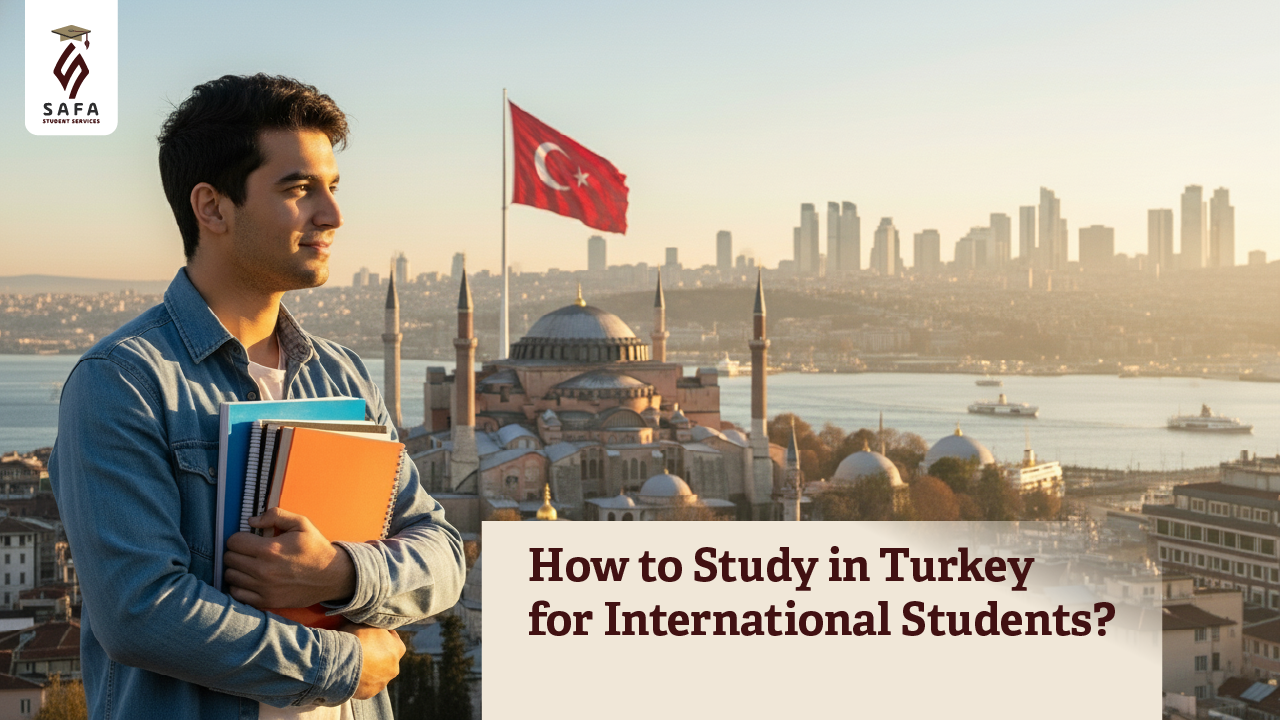
How to Study in Turkey for International Students 2026?

جدول المحتويات
Why Study in Turkey in 2026?
Turkey has become a global education hub by offering internationally recognized degrees, affordable tuition, and a rich cultural experience that connects Europe and Asia. In 2026, more than 250,000 international students are expected to study across Turkish universities. The blend of high academic quality and affordable living costs makes it a top choice compared to the US, UK, or Australia.
How has Turkey’s education system improved over the past decade?
Over the last ten years, Turkish universities have significantly expanded their programs in English, increased research funding, and strengthened international partnerships. More universities are now listed in QS and Times Higher Education rankings, signaling improved global competitiveness.
Why is studying in Turkey in 2026 particularly attractive for international students?
The year 2026 is especially promising due to new scholarship schemes, more hybrid programs, and improved visa processes. The Turkish government continues to support foreign students through initiatives like Türkiye Scholarships, providing full funding for thousands of applicants yearly.
How can international students apply to study in Turkey in 2026?
Applying to study in Turkey involves several key steps, starting from choosing a university to preparing documents and submitting online applications.
What are the main steps in the application process?
- Choose your program and university based on language, ranking, and budget.
- Prepare required documents, such as transcripts, passport, and language certificates.
- Submit your online application through the university portal or YÖK system.
- Attend an interview if required (some programs demand it).
- Receive your acceptance letter and apply for a student visa.
What are the application deadlines for 2026?
Most universities have two major intakes:
- Fall intake: September–October 2026
- Spring intake: February–March 2026
Some private universities may also offer a summer intake.
What are the admission requirements for international students?
Most universities require a high school diploma or equivalent, academic transcripts, proof of English or Turkish proficiency, and valid identification. Some programs, like engineering or medicine, may require additional entrance exams.
What are the language requirements?
For English-taught programs, students must provide TOEFL or IELTS results. For Turkish programs, proof of Turkish proficiency (TÖMER certificate) is required.
What is the YÖS exam and who needs it?
The YÖS (Foreign Student Exam) is an entrance exam for international students applying to certain public universities in Turkey. It assesses math, reasoning, and general knowledge.
How much does it cost to study in Turkey for international students?
Tuition fees and living costs are significantly lower than in many Western countries.
What are the average tuition fees in 2026?
- Public universities: $300–$1,500 per year
- Private universities: $3,000–$10,000 per year
Tuition depends on the field — medicine and engineering are usually more expensive.
What are the living costs for international students?
The average monthly budget ranges from $400–$800, covering accommodation, food, and transportation. Istanbul is the most expensive city, while cities like Ankara, Konya, and Eskişehir offer lower costs.
How can students save on living expenses?
Many students choose to share apartments, use student transportation cards, and take advantage of campus dining halls, which are heavily subsidized.
What scholarships are available in Turkey in 2026?
Turkey offers a wide variety of scholarships to attract international students.
What is the Türkiye Scholarships Program?
This government-funded program covers tuition, accommodation, health insurance, and a monthly stipend. It’s open to students from over 150 countries.
How can students apply for scholarships?
Applications are made through the Türkiye Scholarships portal, usually between January and February each year. Applicants must submit academic documents, a motivation letter, and reference letters.
Are there university-specific or private scholarships?
Yes. Many universities and private institutions, such as Sabancı University and Koç University, offer partial or merit-based scholarships.
What is the student visa process like in 2026?
After receiving the acceptance letter, students must apply for a Turkish student visa at the nearest Turkish embassy or consulate.
What documents are required?
- Valid passport
- Acceptance letter from a Turkish university
- Proof of financial means
- Health insurance
- Visa application form and photographs
How long does the visa process take?
It usually takes 4–8 weeks, depending on your country. After arriving in Turkey, students must apply for a residence permit within one month.
Can international students work while studying in Turkey?
Yes, but with restrictions.
What are the part-time work rules for students?
International students can work up to 24 hours per week, depending on their visa type. Work permits are required and can be obtained through the Ministry of Labor and Social Security.
What jobs are popular among international students?
Students often work in hospitality, translation, teaching English, or online freelancing.
What are the best universities in Turkey for international students in 2026?
Top universities with strong English programs and global recognition include:
- Middle East Technical University (METU)
- Koç University
- Bilkent University
- Sabancı University
- İstanbul Technical University (ITU)
Which Turkish universities offer the best English-taught programs?
Private universities tend to have more English programs, especially in business, IT, and international relations.
What is student life like in Turkey for foreigners?
International students in Turkey enjoy a culturally rich, affordable, and social lifestyle.
What cultural experiences can students enjoy?
Students can explore historical sites, Mediterranean beaches, and Turkish cuisine. The hospitality of locals helps newcomers adapt quickly.
How is transportation for students in Turkish cities?
Public transport is efficient and inexpensive. Students get discounted metro, bus, and tram cards.
Are there online or hybrid study options in Turkey in 2026?
Yes. Many universities now offer hybrid and fully online programs, especially after the digital transformation triggered by COVID-19.
Which universities provide online degrees?
Institutions like Anadolu University and Istanbul University offer a range of online bachelor’s and master’s programs.
What challenges do international students face in Turkey?
Common challenges include language barriers, adaptation to local customs, and bureaucratic procedures.
How can students overcome language barriers?
Enrolling in a TÖMER Turkish language course helps ease daily communication and academic life.
What university support services are available?
Most universities have international offices, offering orientation sessions, legal guidance, and cultural integration programs.
What are the career opportunities after graduation in Turkey?
Graduates can either stay in Turkey for work or return home with internationally recognized degrees.
Can students stay after graduation?
Yes. Graduates can apply for a short-term residence permit to search for jobs or transition to a work visa.
What is the average salary for graduates in 2026?
Starting salaries range between 12,000 and 18,000 TRY per month ($350–550), depending on the field. IT, engineering, and health sectors pay the most.
What are the most promising industries for international graduates?
Technology, digital marketing, tourism, and education are growing sectors hiring international talent
Choose based on your budget, program, and lifestyle — Istanbul for diversity, Ankara for politics and research, Izmir for coastal life, and Eskişehir for affordable student living.
State universities are public and more affordable, while foundation universities are private, usually offering modern facilities, smaller classes, and more English-taught programs.
Yes, many universities accept students without IELTS/TOEFL if they pass the university’s English proficiency exam or completed previous education in English.
Yes, Turkey is part of the Erasmus+ program, allowing students to study for one or two semesters at partner European universities with credit transfer options. 1. How do I choose the right city to study in Turkey?
2. What is the difference between state and foundation universities?
Can I study in Turkey without IELTS or TOEFL?
4. Are there student exchange programs with European universities?
Latest News

Related Articles & News
Follow our latest articles

study petroleum engineering in turkey
Many international students seek to study petroleum engineering in Turkey, as it is considered one of the most vital and...
See More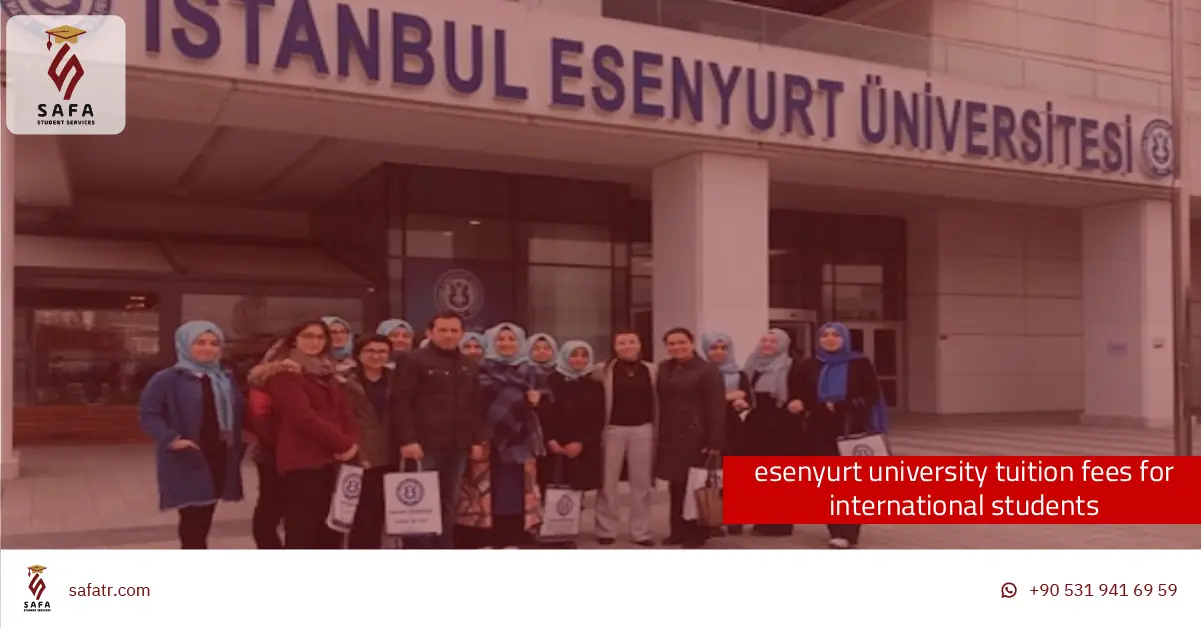
esenyurt university tuition fees for international students
Tuition fees at Esenyurt University are a key factor attracting numerous international students seeking high-quality education at an affordable cost....
See More
Studying Mechanical Engineering in Turkey 2026: A Pillar of Industry and Innovation
In our modern world, from the engines of the cars that drive us daily to giant electricity-generating turbines and precision...
See More
Studying Artificial Intelligence Engineering in Turkey 2026: Towards a Future Led by Intelligent Machines
In a world experiencing an unprecedented technological revolution, Artificial Intelligence (AI) has become the driving force behind innovation in almost...
See More
Studying Dentistry in Turkey 2026: A Bright Smile for a Promising Future
In a world where health and beauty are increasingly important, dentistry is a medical profession that combines scientific precision with...
See More
Studying Aeronautical Engineering in Turkey 2026: Soar into the skies of innovation
Imagine yourself as part of a team designing the aircraft of the future, a cutting-edge space system, or developing technologies...
See More