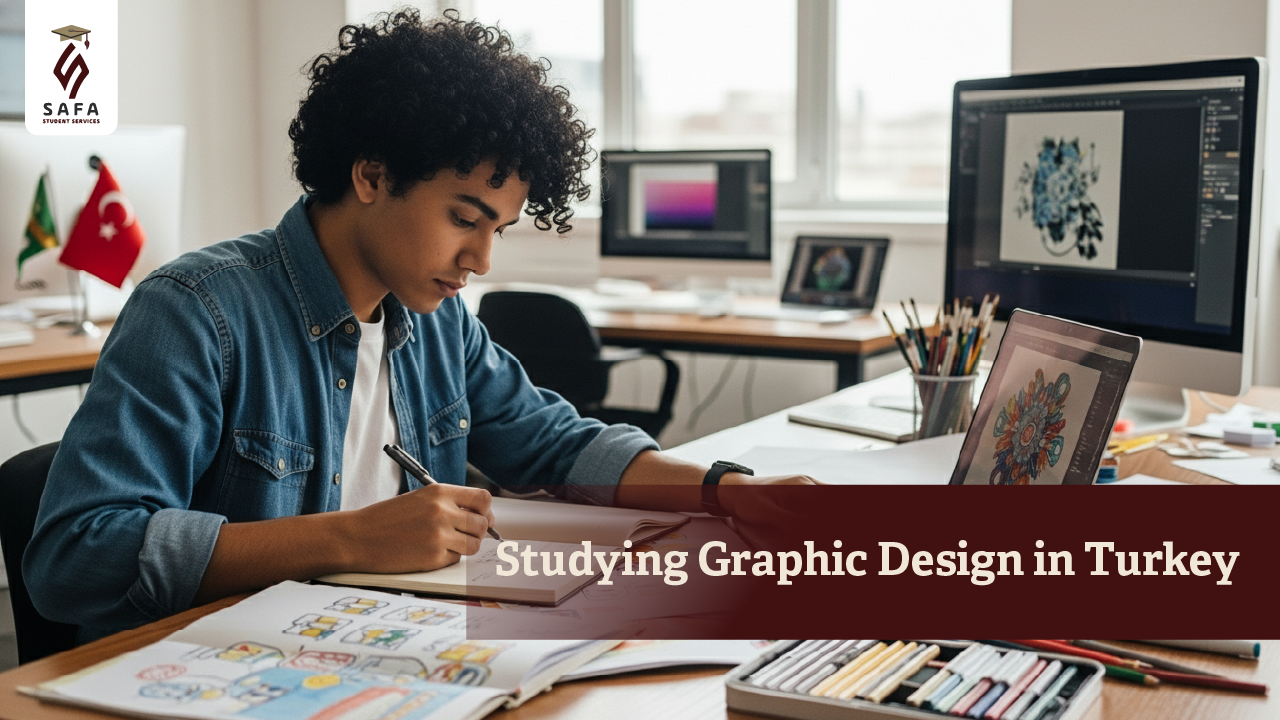
Studying Graphic Design in Turkey 2026: Where Art Meets Technology

جدول المحتويات
In an era dominated by visual imagery and messaging, graphic design has become more than just an art form; it’s a strategic necessity for businesses and brands to effectively communicate with their audiences. From logos and advertisements to user interfaces and 3D imaging, graphic designers are the cornerstone of any marketing campaign or creative project. With the rapid development of the creative and technological industries in Turkey, it has emerged as an ideal destination for ambitious students aspiring to study graphic design in Turkey in 2025. This comprehensive article will provide you with a detailed guide covering everything you need to know about this specialization, from its definition and academic aspects to admission requirements, costs, and career prospects.
What is graphic design? And why is it important in 2025?
Graphic design is the art and process of communicating ideas and messages using visual and textual content. This discipline combines creativity, technology, and an understanding of communication principles to create engaging and effective visual solutions. Graphic design encompasses a wide range of subfields, such as:
- Branding design: logos, visual identities, brand guides.
- Advertising and marketing design: posters, print and digital advertisements, sales materials.
- Web design and user experience (UI/UX Design): Website and application interfaces, user experience.
- Designing printed materials: books, magazines, newspapers, brochures.
- Editorial design: Designing the visual content of articles and reports.
- Animation and Motion Graphics: Animated videos, dynamic illustrations.
- Photography and videography: as an integral part of the design process.
In 2025 and beyond, graphic design will become increasingly important due to the following global trends:
- Comprehensive digital transformation: All businesses are moving towards a digital presence, which requires visually appealing content on the web, social media, and applications.
- Content economy: Increased demand for high-quality visual content across all platforms, from video to interactive designs.
- E-commerce: Online stores need professional product designs, visual marketing campaigns, and a seamless user experience to attract customers.
- Data visualization: Transforming complex data into easily understandable graphs and designs.
- Virtual and augmented reality: The increasing use of 3D and interactive designs in these technologies.
These ongoing changes make a graphic design graduate not just an artist, but a problem solver, capable of transforming ideas into impactful visual messages in a sophisticated digital environment.
Advantages of studying graphic design in Türkiye 2025
Türkiye offers a range of unique advantages that make it an excellent choice for studying graphic design in 2025:
- Quality of applied education: Turkish universities, especially faculties of fine arts, design, and communication, focus on providing applied education that prepares students for the job market. These universities often have design studios equipped with state-of-the-art software and equipment.
- Affordable cost: Compared to leading countries in the fields of arts and design, the costs of studying and living in Türkiye are more economical, allowing students to obtain a high-quality education on a reasonable budget.
- English-language programs: Turkish universities recognize the importance of English in the fields of global design and technology, and therefore many of them offer graphic design programs entirely in English, removing the language barrier for international students.
- A rich creative and cultural environment: Türkiye is a melting pot of Eastern and Western cultures, boasting a rich artistic history. This environment provides an inexhaustible source of inspiration for design students.
- Vibrant cities and a hub for innovation: Istanbul and Ankara in particular are centers for advertising agencies, design firms, and emerging technology companies, providing opportunities for practical training and building professional relationships.
- Festival and exhibition opportunities: Türkiye hosts many art and design events, in which students can participate to showcase their work and network with professionals.
- Investing in technology: Turkish universities are investing in the latest software and hardware used by professional designers, ensuring that students are trained on contemporary tools.
What will you study in a graphic design major?
A Bachelor of Science in Graphic Design program is typically 4 years long and covers a wide range of theoretical and practical subjects:
- Basic materials in design and art:
- Principles of graphic design
- Color theory
- Drawing and photography
- History of Art and Design
- Typography (the art of writing and printing)
- Digital photography
- Professional design software:
- برامج Adobe Creative Suite (Photoshop, Illustrator, InDesign, After Effects, Premiere Pro)
- 3D design software (such as Autodesk Maya, Cinema 4D, Blender)
- Areas of specialization:
- Logo and visual identity design
- Advertising design
- Web design and user interface (UI/UX)
- Print design, packaging
- Animation and Motion Graphics
- Digital photography and image processing
- Illustration
- Other theoretical and applied materials:
- Visual Information Systems
- Design ethics and law
- Design Marketing
- Creative Project Management
- Communication theories
In addition to these materials, students are encouraged to work on intensive practical projects, build a professional portfolio, and participate in workshops and exhibitions.
Admission requirements for studying graphic design in Türkiye 2025
Admission requirements for studying graphic design at Turkish universities vary for international students depending on the type of university and the language of instruction:
1Public universities:
- High school diploma: Good grade (usually no less than 70%, and may be higher for prestigious universities). Arts and science degrees are accepted.
- Admission tests:
- YÖS Test: This is the Turkish aptitude test for foreign students, and it is required by most public universities.
- The SAT (SAT I) test: Some public universities may accept the SAT test as an alternative to the YÖS exam, and require a competitive score.
- Talent exams: These are the most important requirement for many design departments in public universities. These exams typically include:
- Drawing test (may require freehand drawing or drawing from a note).
- Design testing (may involve creating a specific design or solving a visual problem).
- A personal interview to assess creativity, artistic inclinations, and portfolio, if any.
- Proficiency in the language:
- Turkish language: If the program is in Turkish, proof of language proficiency is required through the TOMER test at level C1, or the student can study a preparatory year for the Turkish language.
- English language: If the program is in English, proof of proficiency is required through tests such as TOEFL or IELTS, or the student can pass the university’s language placement test.
2. Private (endowment) universities:
- High school diploma: with an acceptable grade (it may start from 50-60% in some universities, and it is preferable to be higher).
- Admission tests: Most private universities do not require YÖS or SAT tests as a basic requirement, and are satisfied with the high school GPA.
- Proficiency in the language:
- Turkish language: Same requirements as for state universities if the program is in Turkish.
- English language: Same requirements as government universities (TOEFL/IELTS) or passing the university’s language placement test.
- Additional documents/special requirements: Many private universities, especially those with a strong reputation in design, may require:
- Portfolio: This includes the student’s best previous artwork or design work (drawings, photography, digital designs). This requirement is crucial for admission.
- Statement of Purpose
- Curriculum Vitae (CV)
- Personal interview
Important advice:Given the creative aspect of graphic design, portfolios and artistic aptitude tests often carry significant weight in admissions decisions, sometimes even more so than academic grades alone. Start building a strong portfolio that reflects your personality and style.
Cost of studying graphic design in Türkiye 2025
Türkiye offers a variety of options in terms of cost, making it suitable for different budgets:
1. Fees for public universities:
- Public universities are the most economical option. Annual tuition fees for graphic design studies at these universities typically range from $300 to $1500.
- Programs taught in English may be slightly more expensive than those taught in Turkish.
2. Private university fees:
- Annual fees for studying graphic design at private (endowment) universities typically range from US$3,000 to US$8,000.
- Private universities with a high academic reputation and state-of-the-art facilities may have higher fees within this range.
- Many private universities offer options for paying fees in installments (annual or quarterly) to make things easier for students.
Cost of living in Türkiye 2025:
In addition to tuition fees, students must estimate living costs, which vary depending on the city and the student’s lifestyle.
- Average monthly cost: Typically ranges from US$350 to US$700.
- Accommodation:
- Government housing (KYK): about $50-$150 per month (cheapest option).
- Private accommodations: $150-$400 per month.
- Shared/private apartments: $200-$600 per month or more depending on location and city.
- Food: $100-$200 per month (you can save by cooking at home or eating at discounted university cafeterias).
- Transportation: Approximately $20-$40 per month using a discounted student transportation card.
- Health insurance: Mandatory for obtaining residency, approximately $100-$150 per year for government insurance (SGK).
- Personal expenses: $50-$150 per month (books, art supplies, entertainment).
Tip: Large cities like Istanbul, Ankara and Izmir have a higher cost of living compared to smaller cities.
Top universities for studying graphic design in Türkiye 2025
Many Turkish universities offer excellent graphic design programs, and here are the most prominent ones based on rankings and reputation:
- Mimar Sinan Fine Arts University: It is one of the oldest art universities in Turkey, and offers strong programs in graphic design and visual arts, with a focus on the artistic and creative aspects.
- Istanbul Technical University (İTÜ): Although it is a technical university, it has strong design departments, particularly in industrial design and communications design, which include aspects of graphic design.
- Bilkent University: A prestigious private university in Ankara, offering graphic design programs in English, and known for its modern facilities and focus on innovation.
- Sabancı University: A leading private university in Istanbul, offering programs in visual arts and visual communication design, with a flexible and research-focused curriculum.
- Bahçeşehir University: A popular private university in Istanbul, offering graphic design and visual communication design programs in English, and distinguished by its central location and industry ties.
- Kadir Has University: A private university in Istanbul, known for its strong departments in design and new media, and it has state-of-the-art studios.
- Yeditepe University: A private university in Istanbul, offering graphic design and visual communication programs in English, with modern infrastructure.
- Izmir University of Economics: Located in Izmir, it offers design programs with a focus on the practical side and keeping up with market demands.
Career prospects for graphic design graduates in Türkiye and worldwide in 2025
Graphic design graduates have broad and diverse career opportunities in multiple sectors, as almost every business needs a strong visual element.
Potential areas of work:
- Graphic designer: in advertising agencies, design firms, publishing houses, or as an “internal designer” in large corporations.
- Visual Identity/Brand Designer: Specializes in building and developing visual identities for companies.
- User Interface and User Experience (UI/UX) Designer: In software development companies, mobile applications, and technology companies.
- Motion Graphics/Animation Designer: In media production studios, television channels, and digital advertising companies.
- Art Director: In advertising agencies or corporate marketing departments.
- Photographer/Digital Artist: As part of a design team or as a freelancer.
- Web designer: A specialist in the visual aspect of websites.
- Print designer/publisher: in publishing houses, magazines, or printing companies.
- Digital Marketing Specialist: Focuses on the visual content of online advertising campaigns.
- Freelancer: Working independently for several clients, a very common option in this field.
In Turkey, the advertising, digital marketing, web development, and e-commerce sectors are experiencing significant growth, creating a constant demand for creative graphic designers. The thriving film and television production industry also offers opportunities in motion graphics and visual effects design.
Tips to boost your career opportunities:
- Building a professional and constantly updated portfolio is the most important tool for showcasing your skills and style to clients and potential employers.
- Mastering basic design software: Adobe Creative Suite is essential, in addition to learning 3D design or animation software if possible.
- Continuous learning and staying up-to-date with trends: The field of design is changing rapidly. Stay informed about the latest techniques, tools, and market trends.
- Developing soft skills: communication skills, problem-solving, creative thinking, time management, and the ability to receive constructive criticism.
- Specialize in a specific area: Consider specializing in UI/UX, motion graphics, branding, or digital design to become an expert in a particular niche.
- Networking: Participate in workshops, conferences, design fairs, and network with other designers and professionals.
- Work experience: Look for opportunities for summer internships, volunteering, or freelance projects to gain experience.
- Proficiency in English is essential for communication in an international work environment and for accessing global educational resources.
Studying graphic design in Turkey in 2025 offers an ideal opportunity for creative students who aspire to combine their passion for art with a desire to work in a dynamic and evolving field. With its well-equipped universities, reasonable costs, and rich cultural environment, Turkey will be your gateway to a successful and fulfilling career in the world of visual design. Get ready to unleash your creativity and make a visual difference in the world.
Latest News

Related Articles & News
Follow our latest articles

study petroleum engineering in turkey
Many international students seek to study petroleum engineering in Turkey, as it is considered one of the most vital and...
See More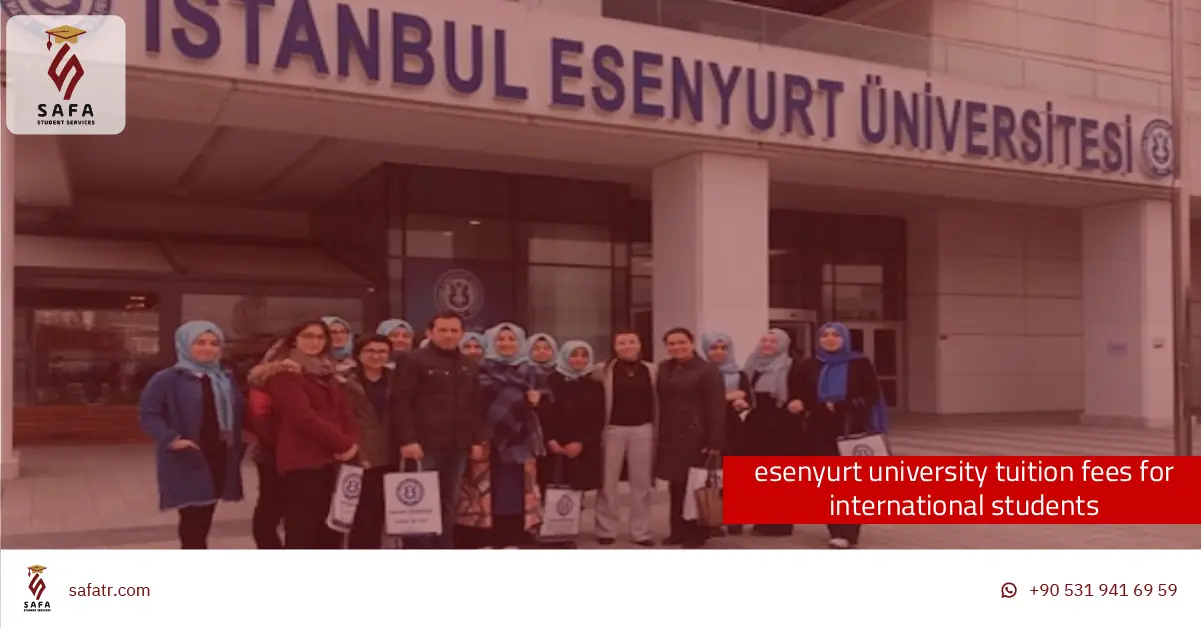
esenyurt university tuition fees for international students
Tuition fees at Esenyurt University are a key factor attracting numerous international students seeking high-quality education at an affordable cost....
See More
Studying Mechanical Engineering in Turkey 2026: A Pillar of Industry and Innovation
In our modern world, from the engines of the cars that drive us daily to giant electricity-generating turbines and precision...
See More
Studying Artificial Intelligence Engineering in Turkey 2026: Towards a Future Led by Intelligent Machines
In a world experiencing an unprecedented technological revolution, Artificial Intelligence (AI) has become the driving force behind innovation in almost...
See More
Studying Dentistry in Turkey 2026: A Bright Smile for a Promising Future
In a world where health and beauty are increasingly important, dentistry is a medical profession that combines scientific precision with...
See More
Studying Aeronautical Engineering in Turkey 2026: Soar into the skies of innovation
Imagine yourself as part of a team designing the aircraft of the future, a cutting-edge space system, or developing technologies...
See More